 Now the dust has settled, I’ve been reflecting on the controversial recommendation from the American College of Medical Genetics and Genomics (ACMG) that all clinical genomes should be screened for a specific set of conditions. Following the release of the guidelines, the European Society of Human Genetics (ESHG) published its more conservative recommendations, and vigorous debate has continued internationally regarding the wisdom of introducing genomic screening. While I still have some major reservations about the policy (outlined in previous posts), upon reflection there are certainly things some aspects that make a lot of sense…
Archive for the 'ELSI' Category
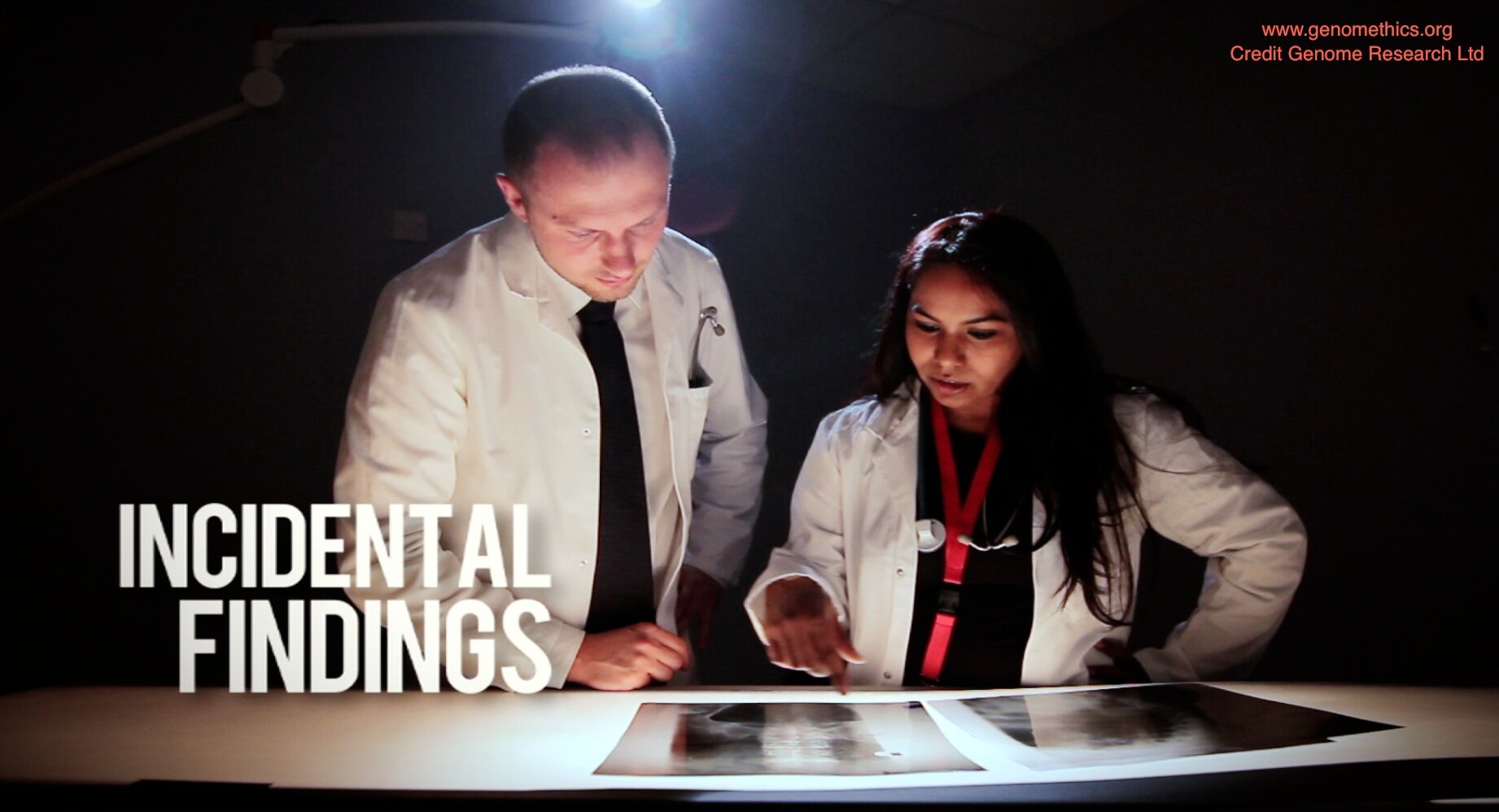
 The ongoing debate about whether, what, when and how to feedback incidental findings (IFs) from whole genome sequencing continues to rage on both sides of the Atlantic following the American College of Medical Genetics and Genomics’ controversial recommendations on reporting IFs released last month. In an unexpected twist, the authors of the guidance have now written “a clarification” in response to the many criticisms that have been raised including here on GenomesUnzipped. The clarification covers five points – autonomy, children, labs, communication and interpretation.
Continue reading ‘ACMG guidelines on IFs – responding to the response…’
Guest Co-Author: Dr Anna Middleton is an Ethics Researcher and Registered Genetic Counsellor, based at the Wellcome Trust Sanger Institute, UK.
The American College of Medical Genetics (ACMG) has recently published recommendations for reporting incidental findings (IFs) in clinical exome and genome sequencing. These advocate actively searching for a set of specific IFs unrelated to the condition under study. For example, a two year old child may have her (and her parents’) exome sequenced to explore a diagnosis for intellectual disability and at the same time will be tested for a series of cancer and cardiac genetic variants. The ACMG feel it is unethical not to look for a series of incidental conditions while the genome is being interrogated, conditions that the patient or their family may be able to take steps to prevent. This flies in the face of multiple International guidelines that advise against testing children for adult onset conditions. The ACMG justify this as “a fiduciary duty to prevent harm by warning patients and their families”. They conclude that “this principle supersedes concerns about autonomy”, i.e. the duty of the clinician to perform opportunistic screening outweighs the patients right not to know about other genetic conditions and their right to be able to make autonomous decisions about testing.
One of the major bioethical debates in clinical genetics and genomics research is the issue of what to do with incidental or secondary findings (IFs) unrelated to the original clinical or research question. Every genome contains thousands of rare variants, including a surprising number of loss of function variants, as well as hundreds of variants associated with common disease and dozens linked with recessive conditions. As whole genome or exome sequencing is used more routinely in non-anonymised cohorts – such as the 100,000 patient genomes to be sequenced by the UK NHS – these variants will be uncovered and linked to an increasing number of individuals. What should we do with them?
Robert Green of Brigham and Women’s Hospital in Boston, who co-chairs the American College of Medical Genetics (ACMG) working group on secondary findings, was quoted in a Nature blog last year saying, “we don’t think it’s going to be a sustainable strategy for the evolving practice of genomic medicine to ignore secondary findings of medical importance”. But just saying it doesn’t make it so. There are still numerous questions that need to be addressed – you can be part of the debate by participating in the Sanger Institute’s Genomethics survey.

 Those of us involved in genomics research spend a lot of time thinking about how scientific and technological developments might influence personal genomics. For instance, does the falling cost of sequencing mean that medically useful personal genomics will likely be based on sequence rather than genotype data? (Yes.)
At the Sanger Institute we’ve recently launched (along with our friends at EBI) a project to look more deeply at a question which is less often on the lips of genomics boffins: “How does genomics affect as us people, both individually and in communities?” Because of the obvious resonance with Genomes Unzipped it should come as no surprise that many of us (including myself, Daniel and Luke) have been intimately involved in this initiative.
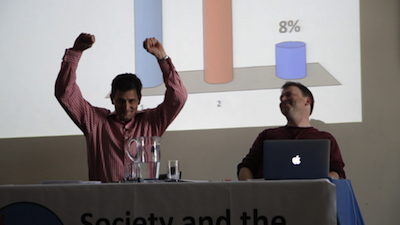
The actual line-up of events has been diverse, and a lot of fun. We’ve had two excellent debates, including one between Ewan Birney and Paul Flicek (pictured) on the value, or lack thereof, of celebrity genomes (covered in more detail here). A poet, Fiona Sampson, spent some time on campus and we’ve commissioned a book of poetry from her. This one raised some eyebrows, but I have to say that talking to her has given me some brand new ways of thinking about my own work. We’re also working on a more interactive project in the hope of making personal genomics a bit more personal. Stay tuned.
 This is a guest post by Teresa Finlay. Teresa is a PhD student at Cesagen, Cardiff University, studying with Adam Hedgecoe and Michael Arribas-Ayllon. A background in cancer nursing and a degree in human biology informed Teresa’s interest in the public’s use of direct-to-consumer genetic testing to ‘self-screen’ for disease risk. She recently secured funding from the ESRC to research users’ and genetics clinicians’ experiences of DTCGT in the UK. If you are a UK resident who has used a DTC genetic test, or a clinician whose patients have used these tests, then you too can get involved in the research.
Direct-to-consumer genetic testing (DTCGT) has been freely available on the Internet for more than five years, despite concerns from the professional community. Companies marketing these tests (such as 23andMe and deCODEme) claim they are empowering people to make healthy lifestyle choices, and frequently draw on the principle of autonomy as a central argument. This position is confirmed elsewhere by those who view genomic knowledge as an individual right, including many of the bloggers at Genomes Unzipped. Other scientists and clinicians express skepticism about the clinical validity and utility of DTCGT, and raise concerns about the potential for anxiety and inappropriate testing. These debates highlight the importance of research into the motivations and actions of DTCGC customers, but research to date remains very limited, and has mostly been performed on customers in North America. The UK, with its large state-run National Health Service and relative lack of private health insurance and providers, is likely to face unique challenges and situations as DTCGT becomes more common. The paucity of research on UK customers indicates the need for a detailed UK study examining users’ and clinicians’ perspectives in order to establish the long-term implications of DTCGT. This post outlines what is currently known about DTCGT, fills some gaps in the UK context and outlines a research project involving users and clinicians in the UK.
 Dr Anna Middleton is an Ethics Researcher and Registered Genetic Counsellor, based at the Wellcome Trust Sanger Institute. She leads the ethics component of the Deciphering Developmental Disorders study, a collaborative project involving WTSI and the 23 National Health Service Regional Clinical Genetics Services in the UK. This project involves searching for the genetic cause of developmental disorders, using array-CGH, SNP genotyping and exome sequencing, in ~12,000 children in the UK who currently have no genetic diagnosis.
One of the issues raised by this, and many other research projects, is what should happen to ‘incidental’ findings, i.e. potentially interesting results from genomic analyses that are not directly related to the condition under study. Here Anna discusses the research she is conducting on this topic as part of the DDD study, and provides a link to the DDD Genomethics survey where you can share your own views (I should also disclose here that both Caroline and I also work on the DDD study).[KIM]
Whole genome studies have the ability to produce enormous volumes of valuable data for individuals who take part in research. However, as a consequence of analysing all 20,000+ genes, whole genome studies unavoidably involve the discovery of health related information that may have actual clinical significance for the research participant. Some of this will be considered a ‘pertinent finding’, i.e. directly related to the phenotype under study (e.g. the child’s developmental disorder); some of this will be considered an ‘incidental or secondary finding’ in that it is not directly linked to the phenotype under study or the research question that the genomic researchers are trying to answer.
Continue reading ‘Ethics and Genomic Research: ‘Genomethics’’

This is a cross-post from my more technical blog, Genetic Inference. However, I thought that it might be of interest to non-specialists who like to keep up with the ongoing debates about the role of genomics in health and medicine.
Last week many of us at Genomes Unzipped (along with over 7000 other geneticists) were at the International Congress of Human Genetics in Montreal. A highlight of the meeting was a large debate entitled “Current and Emerging Sequencing Technologies: Changing the Practice of Medical Genetics”. The panel and the audience were both packed with research scientists, clinicians and industry researchers (you can see the full list of panel participants here), and as you’d expect the discussion was at times pretty lively.
Different perspectives
Joris Veltman described his exome sequencing of 500 individuals with intractable disease, and noted that there has been much success, and very little evidence of harm. Ségolène Aymé mentioned NIH targts that hope to see almost all genetic diseases diagnosed by 2020, and new treatments for rare diseases to be developed simultaneously. There seemed to be a solid consensus across the panel that sequencing should be rolled out as a standard tool in the diagnosis of genetic diseases, provided that the approach is a targeted one, restricted to finding the pathogenic mutation(s) causing the disease.
More controversial was the role of sequencing of healthy individuals, and the general return of data to patients or doctors for any reason other than directly diagnosing a genetic disease. Rade Drmanac, chief scientific officer of Complete Genomics, was obviously strongly in favour of everyone having their genome sequenced, and made it clear that Complete Genomics intends to start offering sequencing to doctors in the future. In his vision, genomes are sequenced at birth, and an initial analysis of immediately actionable results (e.g. potential genetic diseases) is passed to the doctor and patient, with further analyses being carried out if and when they are required.
Michael Hayden immediately dismissed this as hype. He pointed out how unable the US is to handle medical sequencing, with no good systems of reimbursement, a massive shortage of genetic councilors, and a general lack of training in the medical profession.While more positive in general, Louanne Hudgins also expressed worries about the lack of knowledge of genetics among doctors, with some truly scary examples of MDs failing to understanding even the most basic concepts in genetics.
Continue reading ‘Debating the future of genome sequencing in medicine’
Subscribe
 RSS
RSS
 Email
Email
 Twitter
 Authors Elsewhere
- Daniel MacArthur: Gene Therapy Emerges From Disgrace to Be the Next Big Thing, Again
- Luke Jostins: ASHG2012: Who does family studies?
- Luke Jostins: Some updates
- Jan Aerts: Available: Research position Biological Data Visualization and Visual Analytics
- Jan Aerts: Postdoc position available: visualization and genomic structural variation discovery
Recent Comments